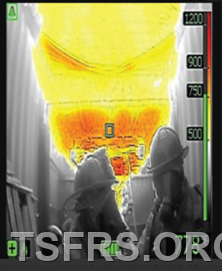
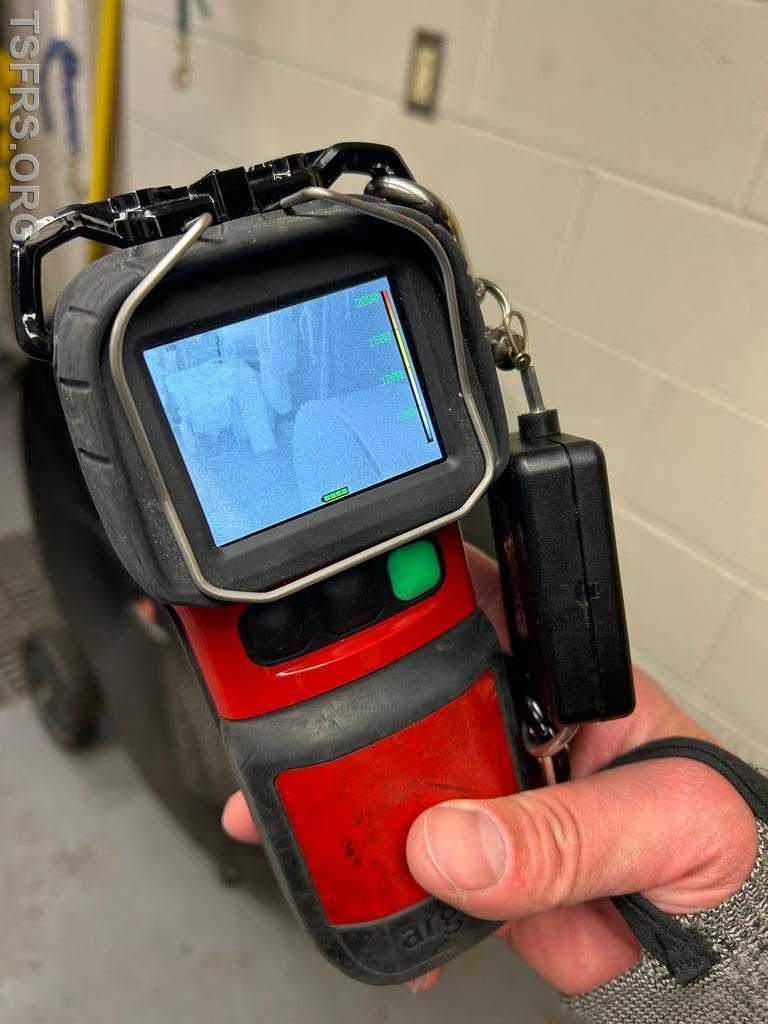
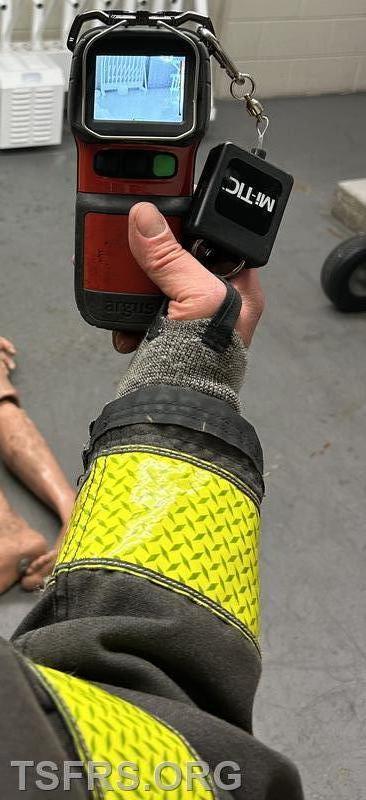
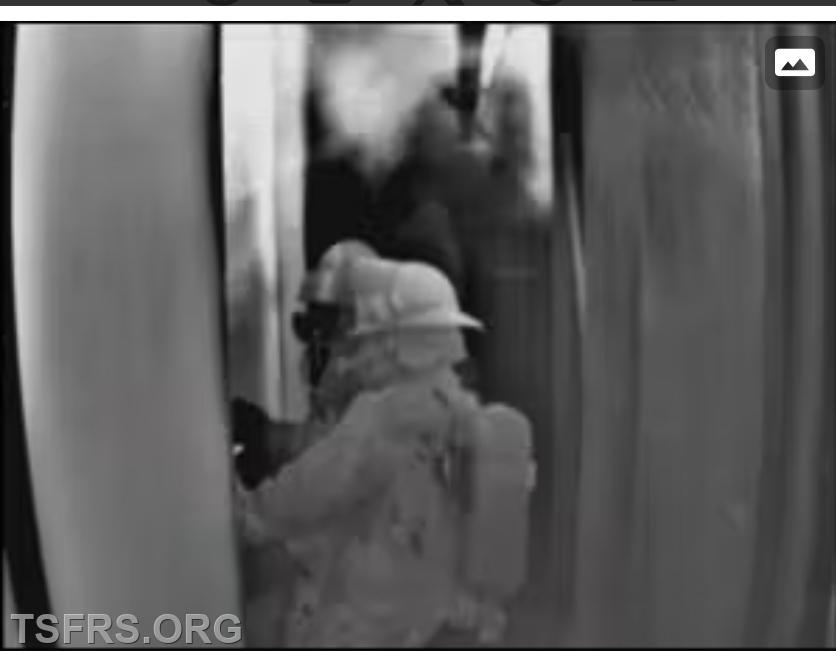
| Perhaps you've seen or heard of these on the news. They're known as Thermal Imaging Cameras, or TICs for short. TICs utilize infrared technology that has morphed from the military to industry and finally to the fire service over that last couple of decades. During this period, they have become smarter, smaller and more readily available.
The concept is pretty simple. All things give off or absorb heat energy to varying degrees. This can be seen by viewing the light emitted in the infrared spectrum, which is invisible to the human eye. However, it starts to get a little more complicated after that. The TIC can detect this light and convert it to a displayable image that shows objects that are hotter or cooler than their surroundings. This allows us to find a human body at 98F in a cloud of obscuring smoke that might be hundreds of degrees or hotter. It also allows us to find a 98F body against a frigid background. TICS also show surroundings such as furniture, doorways and stairs.
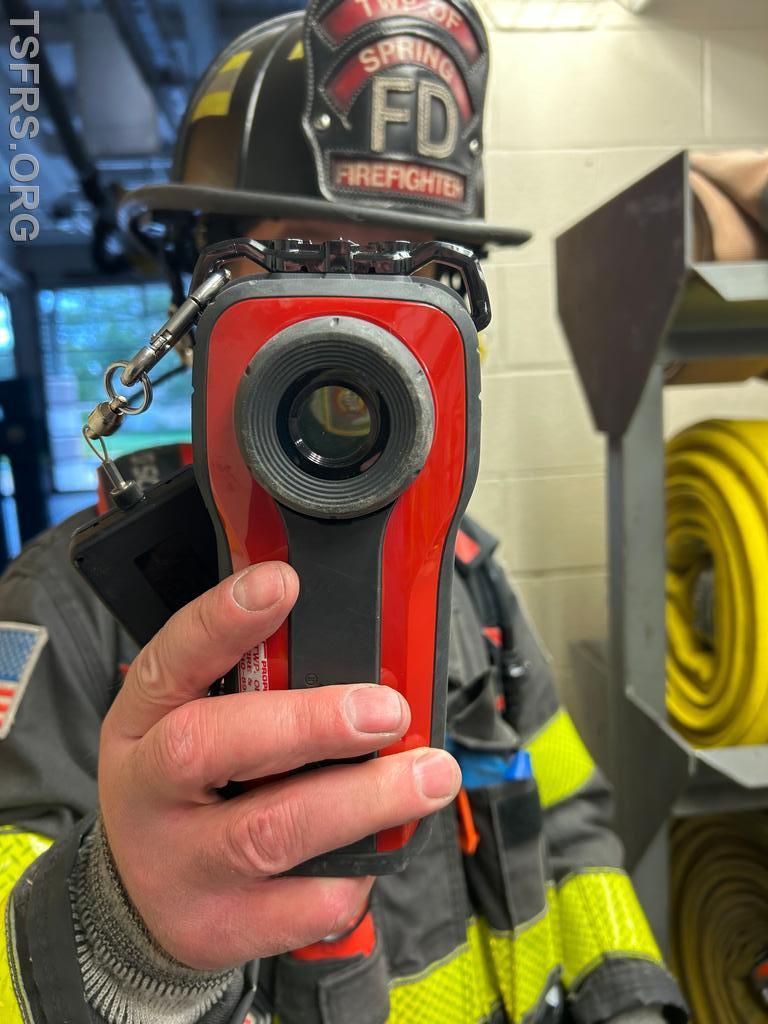
The original TICs used in the fire service were the size of home TV cameras (remember VCRs?) or moderate sized briefcases. Not only were they beyond the financial means of many departments, they were also very cumbersome and inconvenient to use. However, they allowed us to see through smoke for the first time. Over the years, they've become more accurate, and some are the size of a large cell phone. While still somewhat expensive, they have decreased in price to the point where most fire departments have at least one and generally several available.
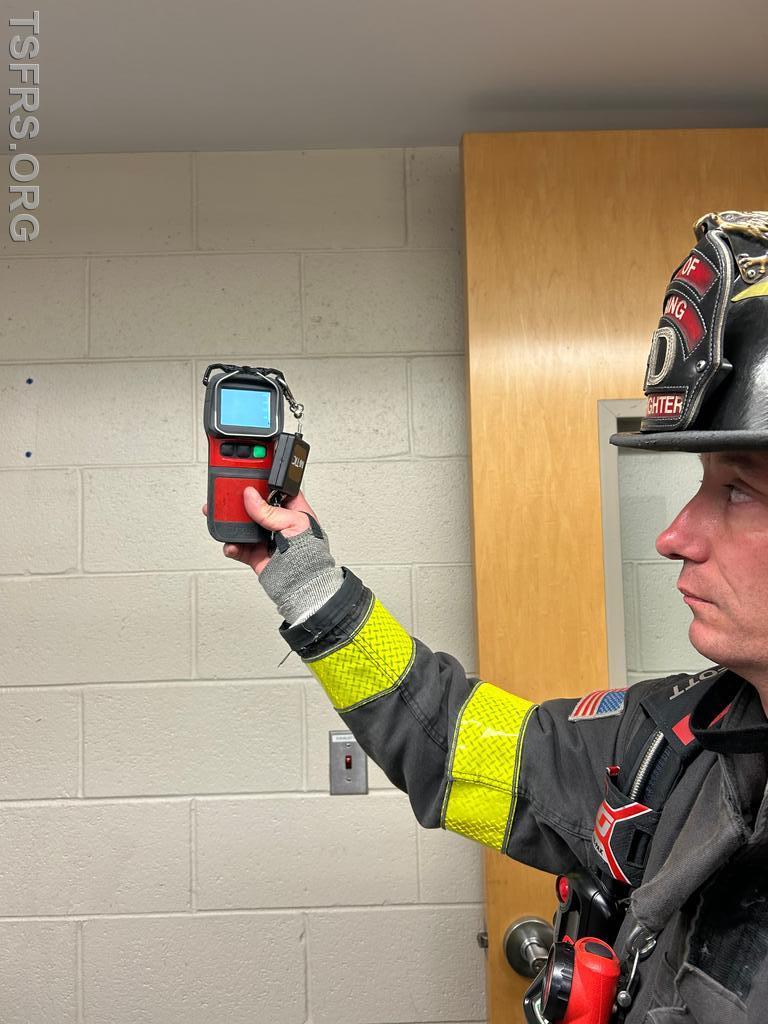
Like many other fire departments, TSFR has at least one on our two engines and the rescue. Generally, the Captain from the unit will carry the imager upon stepping off the vehicle for during structural and other types of fires. This will be used upon entering a smoke filled environment to direct other crew members in searching for victims and sources of the fire. The imager can also be used on just about any other fire call to search for hot spots and hidden fire.
Now you know! |