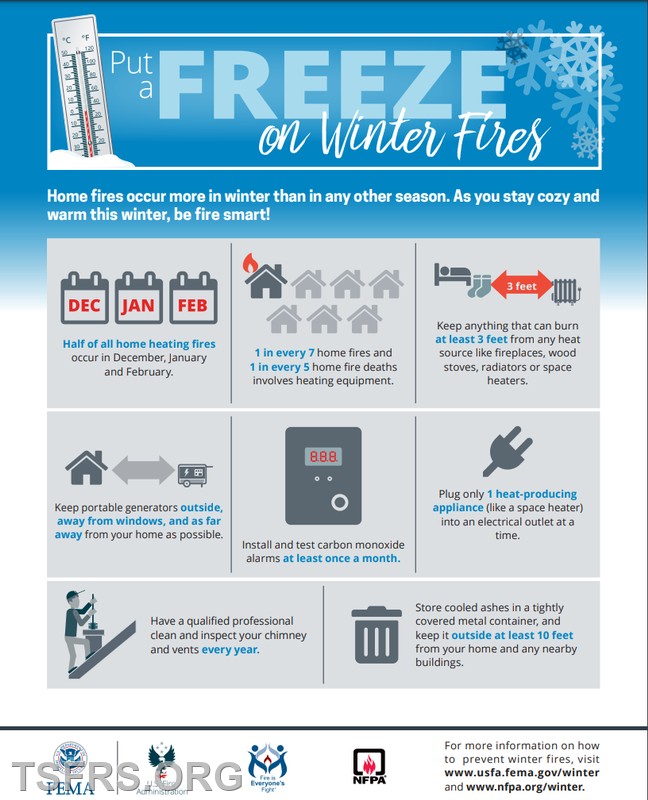
| Information below from NFPA.org to help put a Freeze on Winter Fires.
Heating
Heating is the second leading cause of US home fires and home fire injuries and third leading cause of home fire deaths. December, January and February are the peak months for heating fires. Space heaters are the type of equipment most often involved in home heating equipment fires, accounting for more than two of every five fires (44%), as well as the vast majority of deaths and injuries in home fires caused by heating equipment.
Carbon Monoxide
Often called the invisible killer, carbon monoxide (CO) is an odorless, colorless gas created when fuels such as gasoline, wood, coal, propane, etc. do not burn completely. In the home, heating and cooking equipment that burn fuel are potential sources of CO. Carbon monoxide incidents are more common during the winter months, and in residential properties.
Winter storms
Most of the U.S. is at risk for winter storms, which can cause dangerous and sometimes life-threatening conditions. Blinding wind-driven snow, extreme cold, icy road conditions, downed trees and power lines can all wreak havoc on our daily schedules. Home fires occur more in the winter than in any other season, and heating equipment is involved in one of every six reported home fires, and one in every five home fire deaths.
Generators
Portable generators are useful during power outages, however, many homeowners are unaware that the improper use of portable generators can be risky. The most common dangers associated with portable generators are carbon monoxide (CO) poisoning, electrical shock or electrocution, and fire hazards. According to a 2013 Consumer Product Safety Commission report, half of the generator-related deaths happened in the four coldest months of the year, November through February, and portable generators were involved in the majority of carbon monoxide deaths involving engine-driven tools.
Candles
Candle fires peak in December and January with 11 percent of candle fires in each of these months. Christmas is the peak day for candle fires. Each year between 2015-2019, an average of 7,400 home candle fires were reported each year.
Electrical
Electrical home fires are a leading cause of home fires in the U.S. Roughly half of all home electrical fires involved electrical distribution or lighting equipment, while nearly another half involved other known types of equipment like washer or dryer fans, and portable or stationary space heaters. More statistics on electrical fires. |