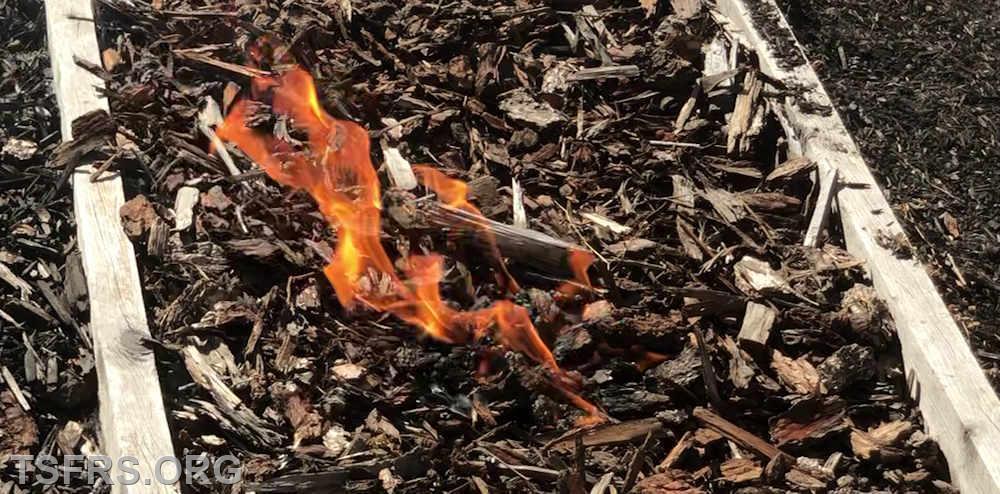
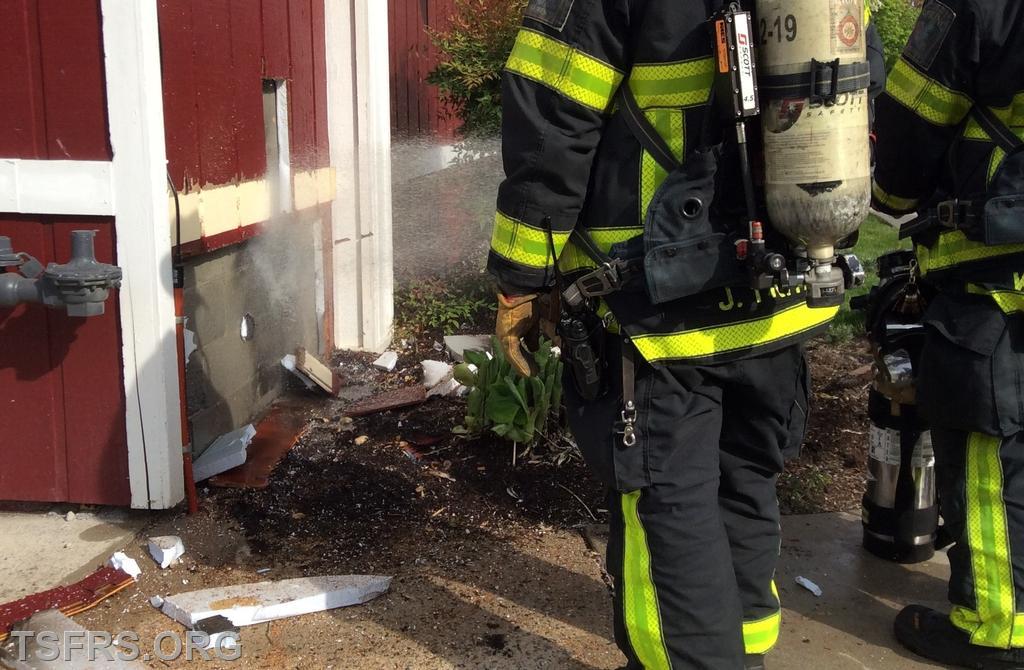
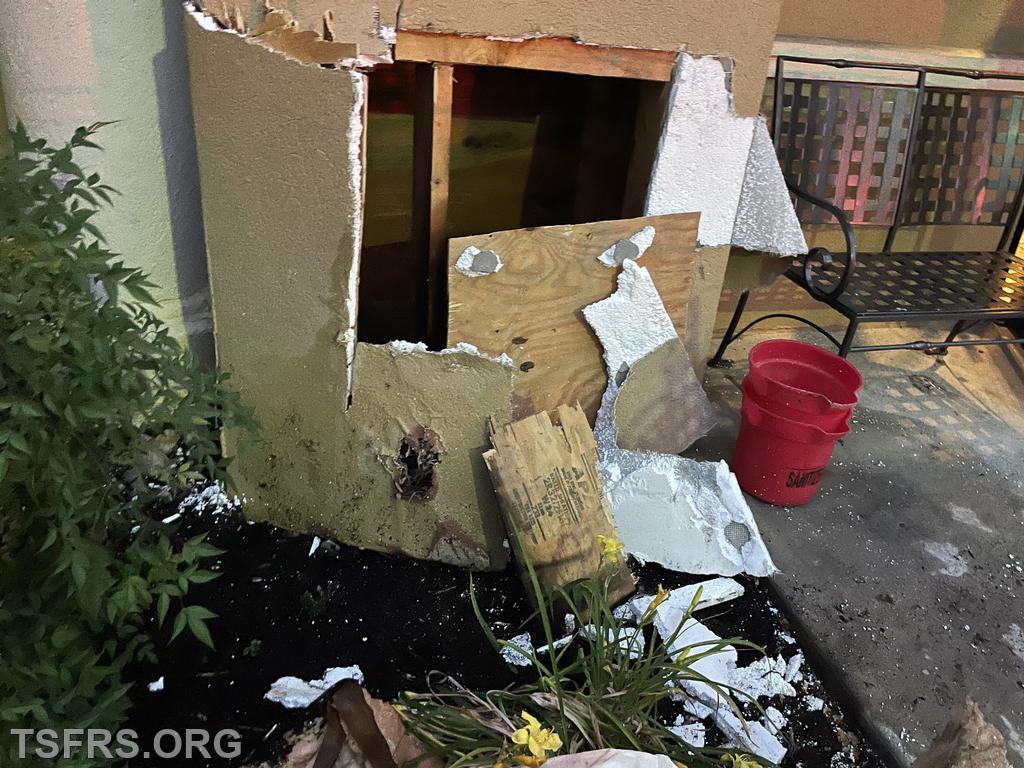
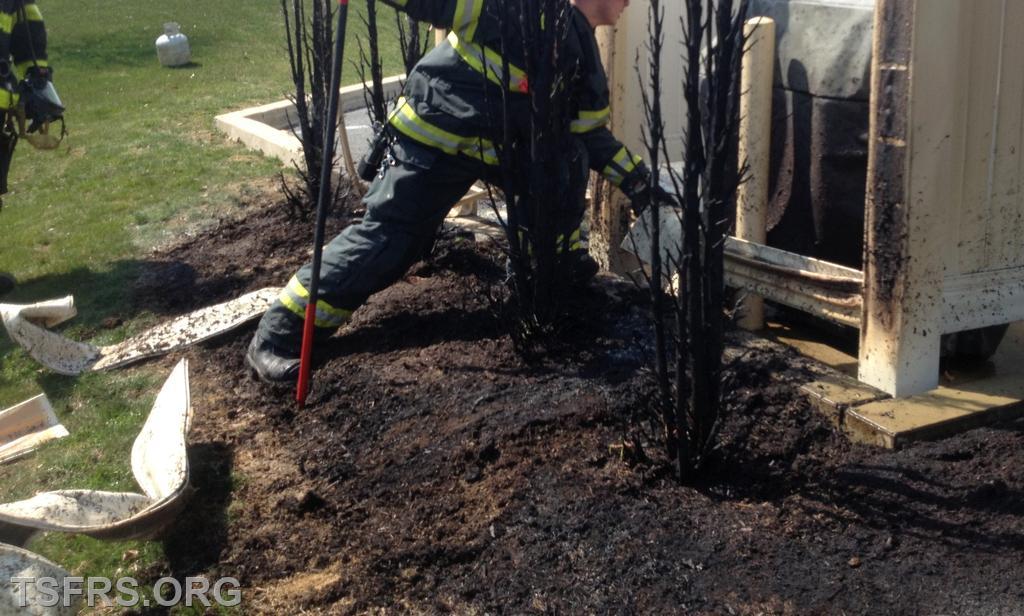
| It’s springtime, and with springtime comes the sprucing up of our properties, both residential and business. One popular landscaping feature is the spreading of mulch in flower and ornamental foliage beds. Mulch generally consists of shredded or chipped wood products or even rubber pellets. Unfortunately, most of these products are inherently combustible. They are easily ignited by external sources and also through internal spontaneous combustion processes.
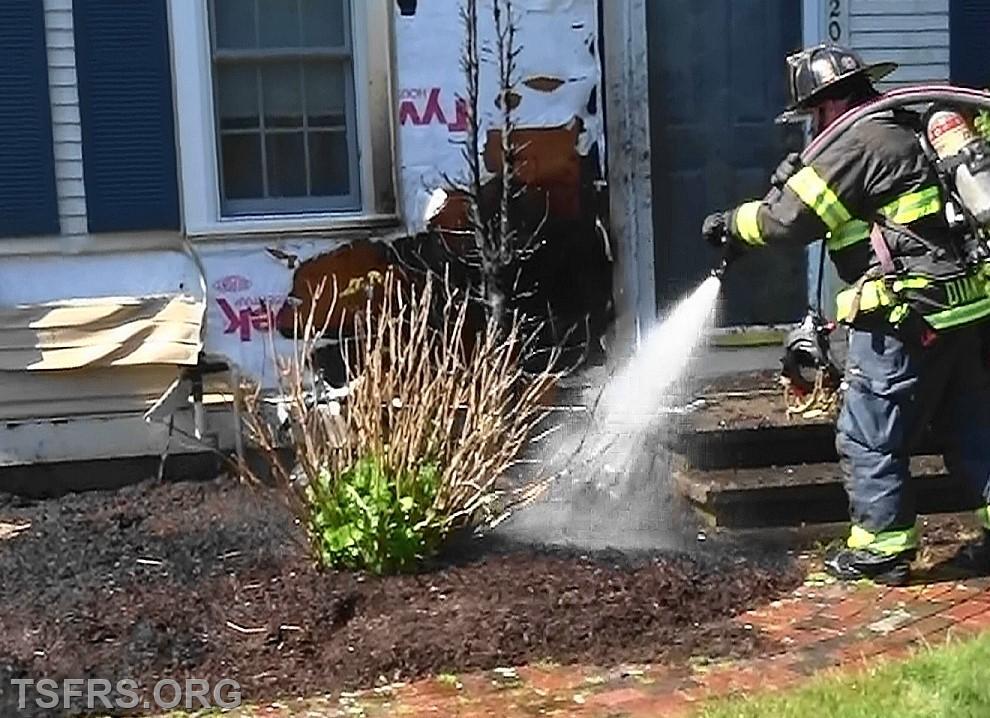
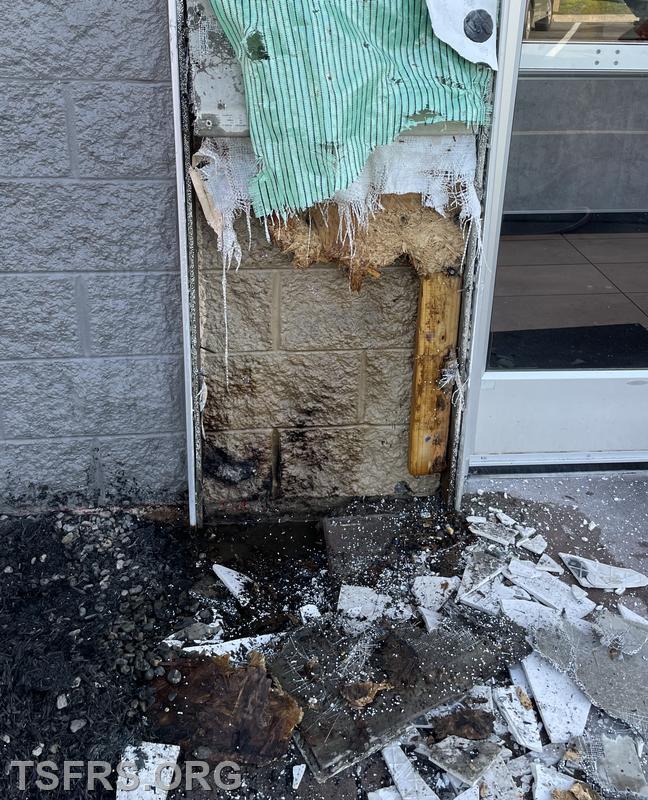
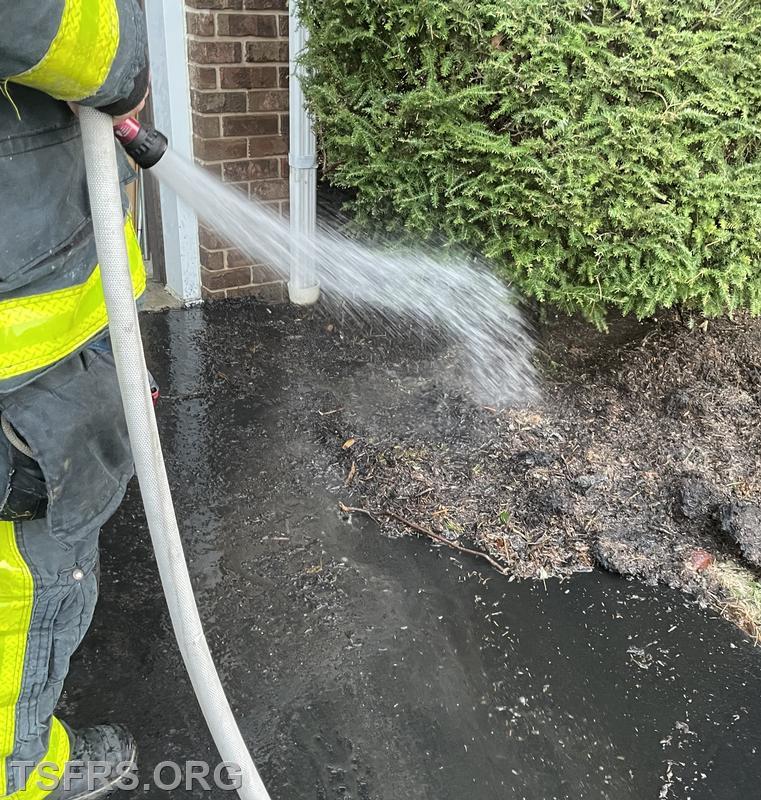
TSFRS and most other fire departments in our area are plagued by mulch fires. This sounds mundane, but these have been known to spread to nearby buildings, trees and other fuel sources. Commercial mulch piles have been known to be several stories high and hundreds of feet long and can burn for days if ignited.
To avoid problems, here are some fire safety tips that you should consider when applying mulch to your property:
1. Maintain a noncombustible buffer zone between the mulch and combustible surroundings. This could be bare earth or a coating of ornamental stone. Remember vinyl or wood siding is combustible. Further, burning mulch can ignite bushes in mulch beds resulting in a small-scale wildfire.
2. Some people incorrectly consider flower beds to be ash trays. If smoking is permitted near your mulch beds (especially near exits and entrances to commercial occupancies), provide a noncombustible receptacle for butts and matches. Consider stone coverings instead of mulch around such places.
3. Keep your mulch hydrated, because dry mulch is more prone to ignition than moist mulch. We are experiencing warm, breezy and dry weather. This is a formula for drying combustible foliage, and mulch is no different. Even after some rain, surface fuels dry out quickly.
4. Any electrical wiring and devices used around mulch must be approved for outdoor use and in good condition. Further, use care with incandescent and other external illumination as the heat from the lights can also ignite mulch. Keep the mulch away from the lights.
5. Avoid excessive mulch depths. 2-4” should be a practical limit. Deep mulch can be prone to spontaneous combustion because heat from natural decay can’t escape, especially in deep piles.
For more info, consult your landscaper or mulch vendor, or trade groups such as Greenpal.com and Homesandgardens.com |