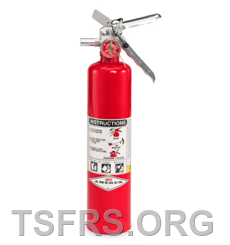
| We frequently get questions from the public about fire extinguishers for their home. Here is some information that might help explain the issue. Most authorities and experts recommend a dry chemical extinguisher with an ABC rating for a for household use. But what does this mean?
First.......the information on how to operate the device and what kind of fire it's intended for is on the label. But if you are reading the label in front of a fire, you're too late. THE TIME TO LEARN HOW TO USE IT IS NOT WHEN THE FIRE IS BURNING IN FRONT OF YOU!!!
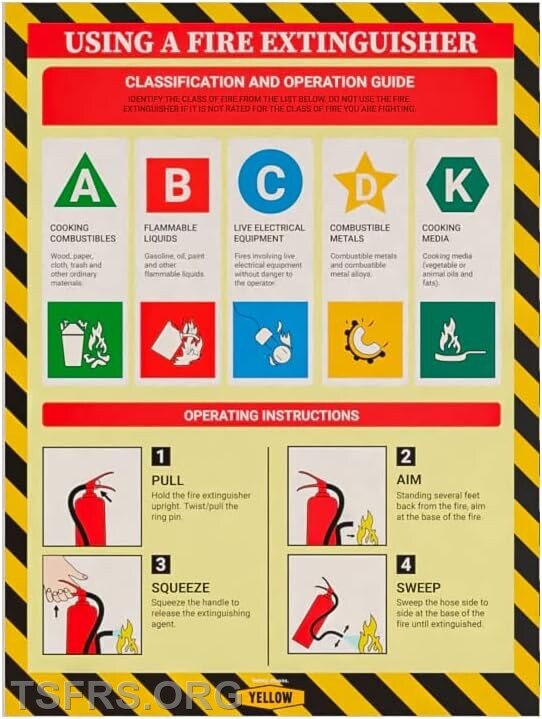
Fire extinguishers are categorized based on the nature of the fire that they are expected to handle. These categories are defined in a standard known as NFPA 10. NFPA 10 defines the fires as Class A (Ordinary combustibles, stuff that leaves an ash), Class B (Flammable liquids), Class C (any fuel if it involves electrical energy), and Class D (Combustible metals, ie magnesium, etc..). In recent years, because of a change in oils used in cooking, a new Class, Class K was added. The classes are also shown with symbols on labels to help identify them in an emergency. These are a green triangle for A, a red square for B, a blue circle for C, a yellow star for D and a black or blue hexagon for K. The agents in the extinguishers (and therefore the extinguishers) are then classified based on the nature of the fire and fuel for which they are intended.
Extinguishers should be rated by a formal, recognized testing laboratory or agency. This includes Underwriters Labs (UL) and the US Coast Guard for maritime applications. A and B fire extinguishing devices are rated in accordance with how they perform on standard test fires. The larger the number, the better the performance. If the agent does not conduct electricity, it is provided with a Class C rating. If the agent is not water reactive with burning metals, it can get a D rating. Class K ratings go to extinguishers intended for cooking oil and grease fires in commercial kitchens. Some agents are effective against multiple classes of fires and therefore are classified accordingly.
Now that you have the background, more information on how to use an extinguisher will be coming in future posts. Stay tuned,,,,, |