When fire strikes, there are some fundamental things that we encourage people to do. First and foremost, alert others to the danger. Then evacuate and when safe to do so, call 911 to report it to the fire department.
If the fire is small enough and does not present an immediate threat to your life, you might consider using a handheld fire extinguisher. If you do, keep yourself between the fire and the way out so you can get out quickly.
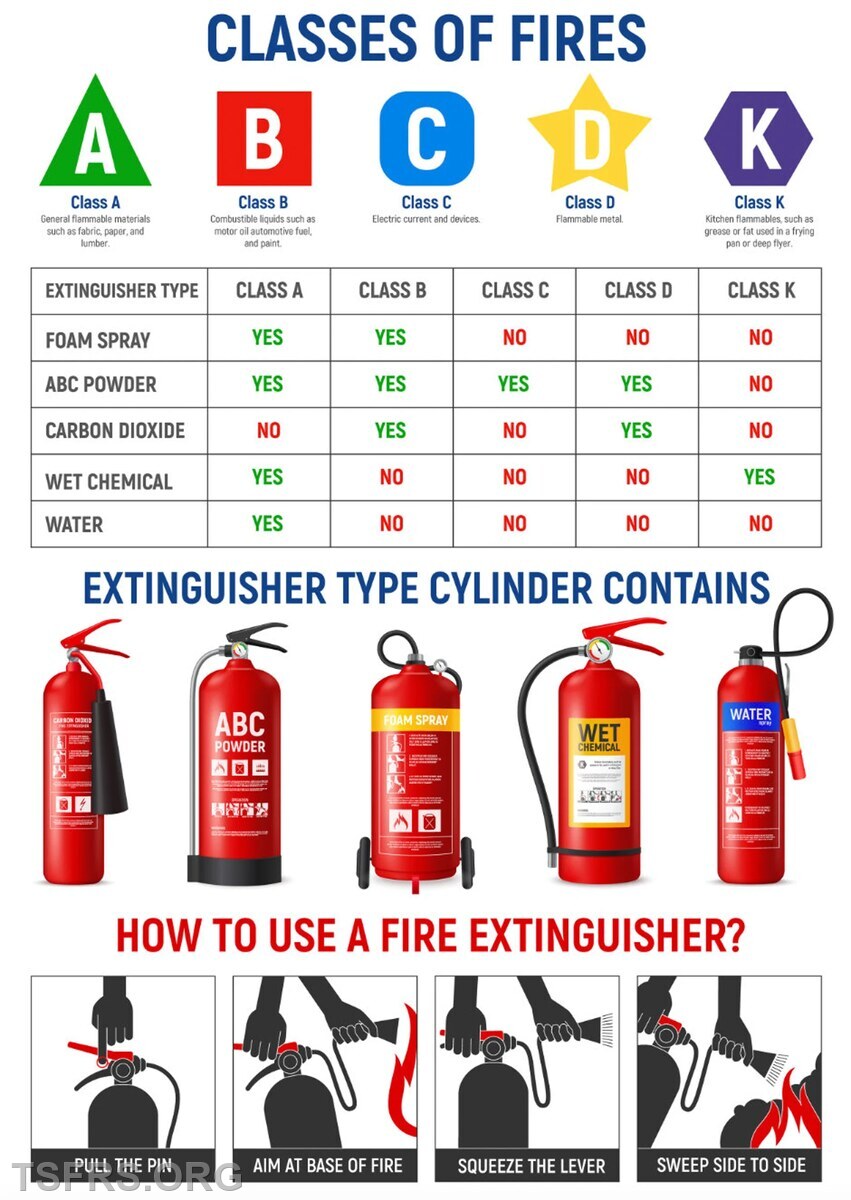
Before you attempt to use an extinguisher---and frankly BEFORE YOU HAVE A FIRE---read the label to determine if the extinguisher is the right one for the job. In most homes, an ABC dry chemical extinguisher is the most common. ABC indicates that the extinguishing agent will handle just about anything we find in a normal home. Then look at the gauge to make sure that the needle is in the green to demonstrate that the agent will actually be discharged. Now you are ready to operate it if you need it.
So, when the need presents itself…
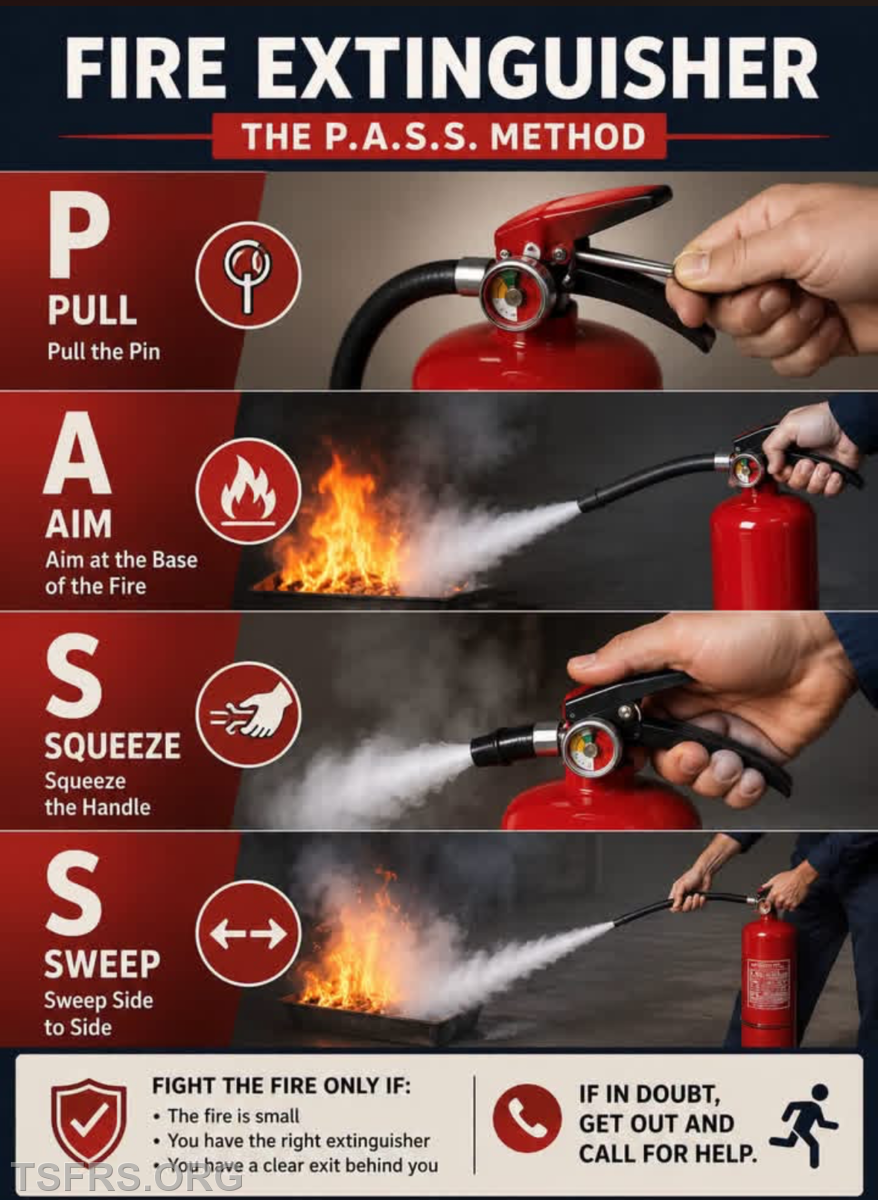
PULL THE PIN—Pins are used to prevent accidental discharge. The pin must be pulled to allow the extinguisher to be used
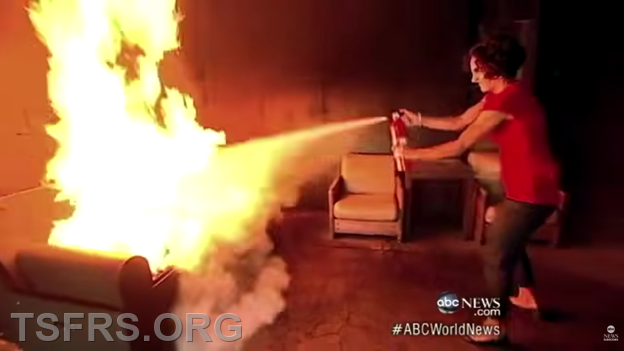
AIM AT THE BASE OF THE FLAMES---Don’t aim at the smoke, and don’t aim at the flames. The extinguisher must be applied where the fire is actually burning and that’s at the fuel. Dont stand close to the fire...give yourself 6-8 feet.
SQUEEZE THE HANDLE---Most extinguishers have a handle that doubles as a trigger. In some the agent nozzle is built into the handle itself. Others have a hose attached that will have to be removed and aimed. Dry chemical is the moral equivalent of talcum powder when it comes out, so expect a cloud. Expect to have a coating of chemical dust on everything, but considering that the alternative is smoke, soot and fire damage, it's not a bad tradeoff.
SWEEP THE BASE OF THE FIRE---Move the agent stream left and right across the entire surface that is burning
Check out the video links below for more details! |
 Add a Comment
